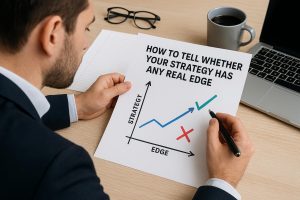

The Importance of Discipline Over Prediction
In various spheres of life, ranging from personal development to professional endeavors, the debate between discipline and prediction is significant. While prediction involves forecasting future events based on certain data or patterns, discipline centers on consistent and dedicated effort. Understanding why discipline often holds more value than prediction can aid in achieving long-term goals more effectively.
Limitations of Prediction
The act of predicting future events often hinges on the availability of data and trends. Even with advances in technology and analytics that have improved the accuracy of predictions in fields like financial markets and weather forecasting, predictions remain inherently uncertain. The complexity and randomness of life mean that unforeseen events have the potential to negate even the most carefully formulated predictions.
Moreover, an over-reliance on prediction can lead individuals and organizations to adopt a reactive strategy. Such strategies are dictated by forecasted events rather than proactive planning. As a result, there is the risk of complacency, where the focus becomes directed towards waiting for predicted outcomes instead of actively pursuing a definitive path to success.
The Role of Discipline in Success
Discipline, in contrast, emphasizes systematic effort and perseverance. It does not depend on external variables but instead focuses on internal drive and consistency. Here are several reasons why discipline plays a crucial role:
Consistency in Effort: Discipline ensures that one consistently works towards their goals, irrespective of immediate outcomes or external circumstances. This consistent effort is often deemed more reliable than the highs and lows brought by relying on predictions.
Adaptability: A disciplined approach is characteristically adaptable and flexible. Predictions may fail to account for unexpected changes, whereas a disciplined individual has a stronger capacity to adjust their strategies and tactics in response to actual developments.
Skill Development: Through disciplined practice, individuals gain the opportunity to refine and enhance their skills and knowledge over time. Predictions make minimal contributions to personal or professional growth, whereas discipline builds competence and confidence.
The Psychological Underpinnings of Discipline
The effectiveness of discipline over prediction can be partly attributed to its psychological aspects. Developing a disciplined mindset requires cultivating the ability to adhere to long-term objectives, despite facing potential setbacks and distractions. It necessitates the setting of clear, actionable goals and the continuous pursuit of these objectives, which fosters a growth-oriented mindset. This growth mindset emphasizes learning from experiences, including failures, and contributes to personal resilience.
Intrinsic Motivation: Discipline often stems from intrinsic motivation—performing an activity for its inherent satisfaction rather than for some separable consequence. Intrinsic motivation is fundamentally linked to higher engagement levels, greater self-esteem, and enhanced creativity, compared to motivation driven by external predictions or rewards.
Self-Control: Discipline is intimately connected with self-control, involving the regulation of emotions and desires to achieve long-term gratification. Exercising self-control assists in overcoming immediate temptations or distractions, thereby maintaining focus on one’s overarching goals.
Practical Applications of Discipline Over Prediction
In the workplace, a disciplined employee typically outperforms peers who merely rely on predictions for guidance. By prioritizing regular skill development and proactive problem-solving, disciplined professionals are more likely to achieve career advancement. For example, employees who commit to lifelong learning and continuous improvement are often better equipped to handle shifts in industry trends and technological advancements.
Similarly, in the realm of finance, while market predictions can be informative, it is the disciplined investor who consistently adheres to their investment strategy and remains patient during market fluctuations that often reaps long-term success. This investor exercises discipline by following a well-devised financial plan, regardless of short-term market volatilities, thereby harnessing the power of compounding and capital growth over time.
In sports, the value of discipline surpasses mere reliance on predictions regarding athletic performance. Athletes often attribute their successes to disciplined training routines, which encompass not only physical conditioning but also mental resilience and tactical acumen. While predictions might forecast the outcomes of matches based on statistical probabilities, the unwavering commitment of disciplined athletes to their training regimen often tips the scales in their favor.
Similar scenarios play out in academia and creative pursuits, where disciplined individuals dedicate themselves to iterative improvement, thereby fostering originality and innovation, and ultimately surpassing the constraints of predictions.
Conclusion
In summary, while predictions can provide useful insights, they should not be solely relied upon in the pursuit of goals. Discipline offers a more robust and resilient foundation for success, as it hinges on personal effort and adaptability rather than external forecasts. By embracing discipline, individuals can significantly enhance their likelihood of achieving their objectives, regardless of the uncertainties and unpredictabilities that life presents.
The necessity of cultivating discipline becomes even more pronounced in a rapidly changing world where the pace of technological, social, and economic changes outstrips predictive capabilities. In such a context, the true advantage lies in the ability to adapt and thrive amidst uncertainty, an ability that is intrinsically linked to discipline. Ultimately, discipline fortifies individuals and organizations against the vicissitudes of life, ensuring sustained growth and success.