Understanding the Distinction Between Gambling and Real Trading
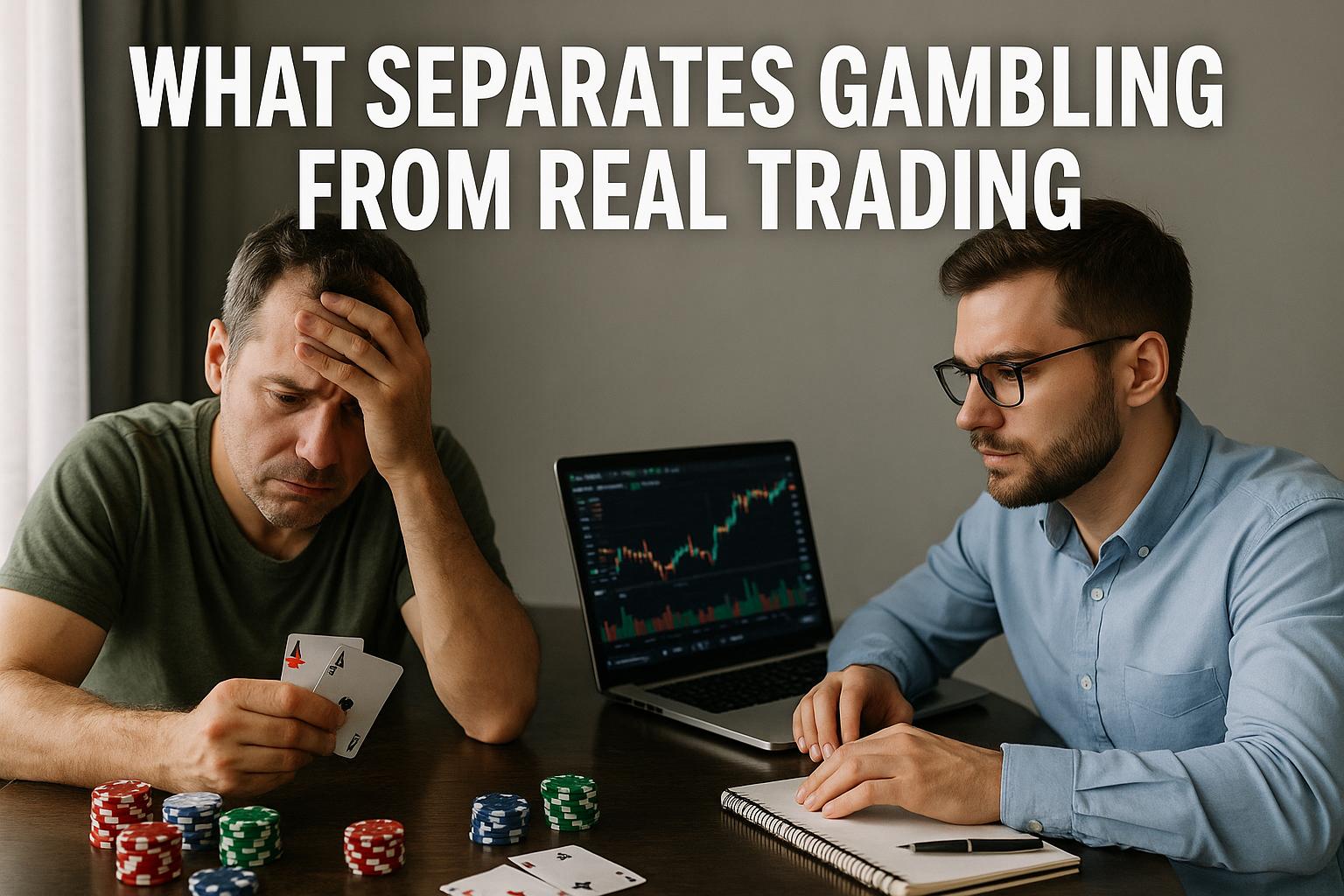
It’s often easy to misconstrue the distinctions between gambling and real trading, as both involve a degree of risk and speculation. However, several fundamental differences set them apart. Understanding these differences can enrich your knowledge and assist in making informed decisions, whether you are a novice or an experienced investor.
Investment Objective
In trading, individuals engage with financial markets aiming for long-term wealth generation through the strategic buying and selling of assets like stocks, bonds, or commodities. Traders analyze data, use historical information, and apply various financial models to assess the potential of an investment. The underlying goal is often to accumulate wealth over time, taking calculated risks based on comprehensive analysis.
Conversely, gambling typically involves a short-term win or loss scenario based on the outcome of an uncertain event. The primary objective in gambling is often immediate monetary gain driven by chance. Unlike trading, it often lacks strategic planning or fundamental analysis, as gamblers place their bets based on instinct or spur-of-the-moment decisions. The nature of gambling is inherently short-sighted, concentrating on immediate results rather than long-term goals.
Risk Assessment
Effective trading incorporates a comprehensive risk management approach. Traders evaluate potential risks and adjust their strategies accordingly. They may use stop-loss orders, diversification, and hedging strategies to mitigate risks and protect their investments. These techniques allow traders to manage their exposure to market volatility and reduce potential losses. Trading involves making informed decisions with an understanding of the risk-to-reward ratio, aiming to achieve sustainable returns.
In gambling, while players may use strategies to guess the outcomes, the results are largely unpredictable, and risk management is limited. The inherent nature of gambling involves all-or-nothing risk, often based on luck rather than skill or knowledge. Gamblers are subject to the whims of uncertainty, where risk cannot be systematically managed or controlled. Consequently, gambling often represents a higher-risk activity, with outcomes that can be challenging to anticipate.
Regulatory Framework
Regulation is a defining line between the two activities. Trading is heavily regulated by financial authorities around the world. These regulations are designed to protect investors, ensure market integrity, and maintain fair trading practices. Compliance with these regulations is mandatory for traders and investment firms. Rules and oversight by bodies such as the Securities and Exchange Commission (SEC) or the Financial Conduct Authority (FCA) help safeguard the financial system and support investor confidence.
In contrast, gambling is generally regulated by gaming or betting commissions, which operate under different rules and objectives than financial market regulators. These bodies focus mainly on ensuring fair play and preventing illegal activities, such as underage gambling and fraud. Although gambling regulations aim to protect consumers, the oversight and objectives differ significantly from those in trading markets. This distinction further emphasizes the fundamentally different nature of each activity.
Analytical Methods
Traders often employ technical and fundamental analysis to evaluate the elements affecting an asset’s price. Technical analysis examines historical price movements and trading volumes to forecast future trends, whereas fundamental analysis evaluates an asset’s intrinsic value through economic indicators, company performance, and industry conditions. These analytical approaches provide traders with a robust framework to make informed decisions and predict potential market movements.
Gambling relies more on probability and statistics concerning the specific game or event. The lack of data-driven analysis means gamblers often make decisions without a substantial basis. While some gamblers may use rudimentary strategies or systems, these often lack the depth and rigor of financial analysis employed by traders. As such, gambling outcomes often hinge on chance rather than informed decision-making.
Market Influence
In trading, the market’s behavior is influenced by various factors, including macroeconomic trends, geopolitical events, and investor sentiment. Traders pay close attention to these factors to make informed decisions. The influence of market dynamics means that traders must remain agile and responsive to changing conditions, adapting their strategies to navigate the complexities of global markets.
However, gambling outcomes, such as those in a casino or sports event, are dictated by inherent probabilities and are largely unaffected by external economic variables. This distinction highlights the distinct nature of market influence in trading versus gambling activities. Gamblers operate in a more insulated environment, where external factors have a minimal impact on outcomes, emphasizing the differences in how each discipline operates.
Conclusion
Ultimately, while trading and gambling may appear similar at first glance, they differ fundamentally in terms of objective, risk management, regulatory standards, methods of analysis, and the factors influencing outcomes. Understanding these differences is crucial for anyone involved in financial markets or gaming, allowing them to approach each activity with the appropriate mindset and strategies.
By recognizing the unique characteristics and inherent risks associated with each, individuals can make more informed decisions and better manage their expectations and outcomes. Whether engaging in trading with a view toward wealth accumulation or participating in gambling as a form of entertainment, a clear understanding of these distinctions provides a foundation for approaching each activity with clarity and awareness.